

Slow Fashion: How to choose pieces that last for years
Repeated clothing purchases can expand your wardrobe without solving the problem of everyday outfits. Some clothes lose their shape, others no longer fit your personal style, and many end up being worn only once or twice.
The concept of slow fashion proposes more deliberate choices, long-term use of clothes and greater attention to quality, provenance and maintenance, so that you feel confident and proud of your choices. However, it does not mean buying exclusively expensive, natural or local products. To properly evaluate a piece, the material, cut, construction, expected use and information provided by the manufacturer must be analyzed together.
What does slow fashion mean?

Definition of the concept
Slow fashion is an approach that looks at the entire journey of clothes: production, purchase, wearing, maintenance, repair and, ultimately, disposal. Its principles include less frequent and better documented purchases, repeated use, verifiable quality, traceability and extended lifespan.
The term is not an official certification and does not have a single commercial definition. It can also be used superficially, without clear evidence. To understand what sustainable means for a product, you need concrete information about its provenance, processing, production, maintenance and likely lifespan. This will help you make more informed and confident choices.
Why did this approach emerge?
The concept has developed amid accelerating fashion cycles, frequent collection launches, and quick access to trends. This pace can encourage impulse buying and treating clothes as easily replaceable products.
The fashion industry is not uniform, however. There are significant differences between brands, factories, materials, and production models, so each product must be analyzed based on the available information, not just based on the category in which the brand is classified.
What slow fashion does not mean
This approach does not require an exclusively neutral or minimalist wardrobe, giving up trends or buying only expensive clothes. Nor does it consider natural materials automatically superior, nor does it require eliminating already purchased fast fashion pieces, adopting a specific aesthetic or demonstrating social status.
The most useful choice for a garment you already own is, as a rule, to wear it as much as possible, maintain it, and repair it when possible.
Slow fashion versus fast fashion

The pace of production and consumption
Fast fashion is associated with frequent releases, rapid adaptation to trends, high volumes and prices that facilitate repeat purchases. The slow alternative favors more temperate collections, pieces that can be worn for several seasons and rarer purchasing decisions.
The difference should not be reduced to the size of the company. A large brand may have different practices from one collection to another, and a small brand does not automatically become responsible just by having a low production volume.
The price and real cost of a garment
A low price may make impulse buying easier, but a high price does not automatically demonstrate quality or responsible production. A useful tool is the cost per wear, calculated by dividing the price by the actual or estimated number of uses.
A 1,500 lei piece worn 100 times costs 15 lei per wear. A 150 lei garment worn once remains more expensive relative to use. The calculation is indicative and does not automatically justify the price of a premium product.
Lifespan and repairability
A garment intended for repeated use should be able to be maintained and, to some extent, repaired. Spare buttons, well-made hems, accessible lining and the possibility of replacing the zipper can extend the product's use.
Initial resistance is not enough. Cleaning, storage and quick intervention on small defects contribute directly to the lifespan.
How do you recognize a piece that can last for years?

Check the material and composition
Read the full label and the percentages of the composition, not just the trade name. Wool, cashmere, leather and other natural materials can have different grades of quality, depending on the fiber, selection and processing.
Analyze the density, uniformity, texture, and how the material bounces back after a slight stretch. Neither natural origin nor a premium name alone guarantees strength or low impact.
Analyze the cut and fit
Try the piece on while walking and standing. If it will be worn over a jacket or sweater, check how it sits with these layers as well.
Look at the shoulders, sleeves, hem, closure, and freedom of movement. A well-made garment that doesn't fit your body or your activities is likely to end up in your closet. Some differences can be corrected with adjustments made by a tailor.
Look at the construction and finishes
The seams should be even, with no loose threads or areas that look strained. Also check the lining, buttons, zippers, pockets, and inner edges.
The lining should allow for movement and not pull on the outer material. These details alone do not guarantee longevity, but they show how much attention was paid to the construction.
Evaluate versatility
Before buying, try to build at least 3 outfits using clothes you already own. The piece should meet a real need and be wearable in contexts that occur frequently in your life.
Versatility is not synonymous with neutrality. A burgundy coat or a dark green jacket can be worn often if the shade fits into your personal palette.
Check maintenance instructions
A piece may be well-made, but it is difficult to maintain if it requires maintenance that is incompatible with your time or budget. Check before purchasing if it requires professional cleaning, special drying or storage conditions.
Maintenance costs are part of the actual cost of the product. They should be evaluated alongside the price and the expected frequency of wear.
Natural material does not automatically mean sustainable fashion

Provenance and traceability matter
The type of material is only one of the criteria. The origin of the raw material, the processing method, the standards applied and the amount of information the buyer can verify are also important.
Terms like “ethical,” “eco,” or “responsible” require explanation and evidence. Without it, they can remain just marketing phrasing.
Durability is analyzed over the entire life cycle
A garment can remain in your wardrobe for many years when it is well made, worn frequently, properly maintained, and repaired when needed. Its impact cannot be assessed solely based on material or price.
Categorical comparisons between leather, fur, wool and synthetic fibers are difficult to make without data obtained with the same methodology. Each material has different advantages, limitations and maintenance requirements.
Certifications do not replace transparency
A certification verifies certain criteria or stages, not all product characteristics. Therefore, it is necessary to analyze what it covers, who grants it, and what its limits are.
For example, Furmark refers to standards and traceability in the natural fur chain. Certification does not prove that the product is impact-free, nor that it will be considered sustainable from any perspective. Provenance, production, lifespan and maintenance must be considered as a whole.
The story and experience behind a piece

Why experience matters when working with materials
There is a difference between mere marketing and direct experience with the selection, cutting and processing of materials. Knowing the behavior of a material can influence the cut, comfort, finishes and maintenance recommendations.
Experience does not automatically guarantee the quality of each product. This must be confirmed by composition, construction and how the piece behaves in use.
From family business to outerwear brand
Mareus has its roots in a family business started in 1991, in the Neamț area, with experience in the craft of natural furs. The activity has evolved into a Romanian premium outerwear brand, with coats, leather jackets, wool, cashmere and other items for the cold season, made through a mixed production model, with local roots and collaborations with specialized European factories.
This history provides context for the experience gained, but current products must still be evaluated based on material, cut, finishes, and fit with the buyer's needs.
What a transparent brand should communicate
Before purchasing, look for information about:
the origin of the materials;
place or model of production;
the exact composition;
maintenance instructions;
relevant certifications and their limits;
repair, adjustment or maintenance possibilities.
If this information is not easy to find, ask the brand or retailer. A clear answer helps you compare products beyond image and price.
Which pieces are worth evaluating as clothing investments?

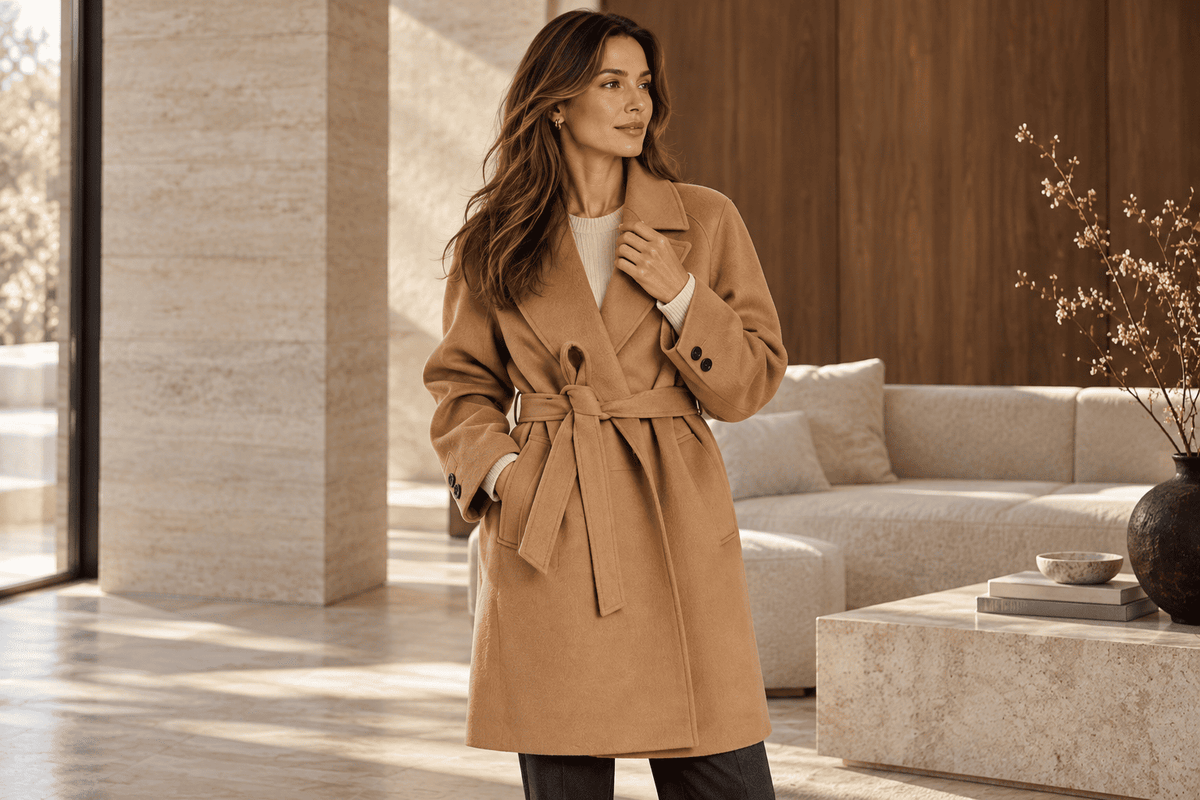
Wool or cashmere coat
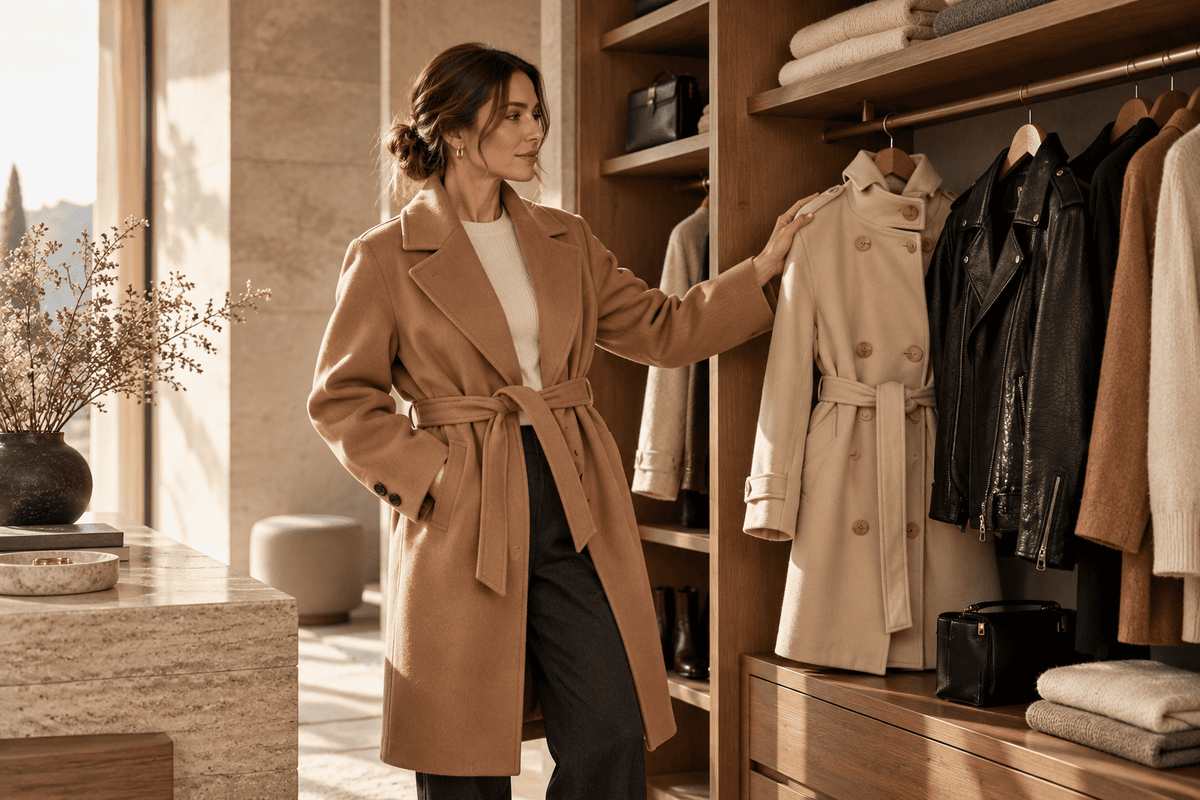
The coat is frequently worn in the cold season and influences the look of several outfits. Check the fiber percentage, weight, lining, shoulder position and space needed for layering.
The shade should be chosen according to your existing wardrobe. The selection of Mareus cashmere and wool coats can be analyzed according to these criteria, without assuming that the material or premium positioning automatically turns each model into a suitable investment.
Leather jacket
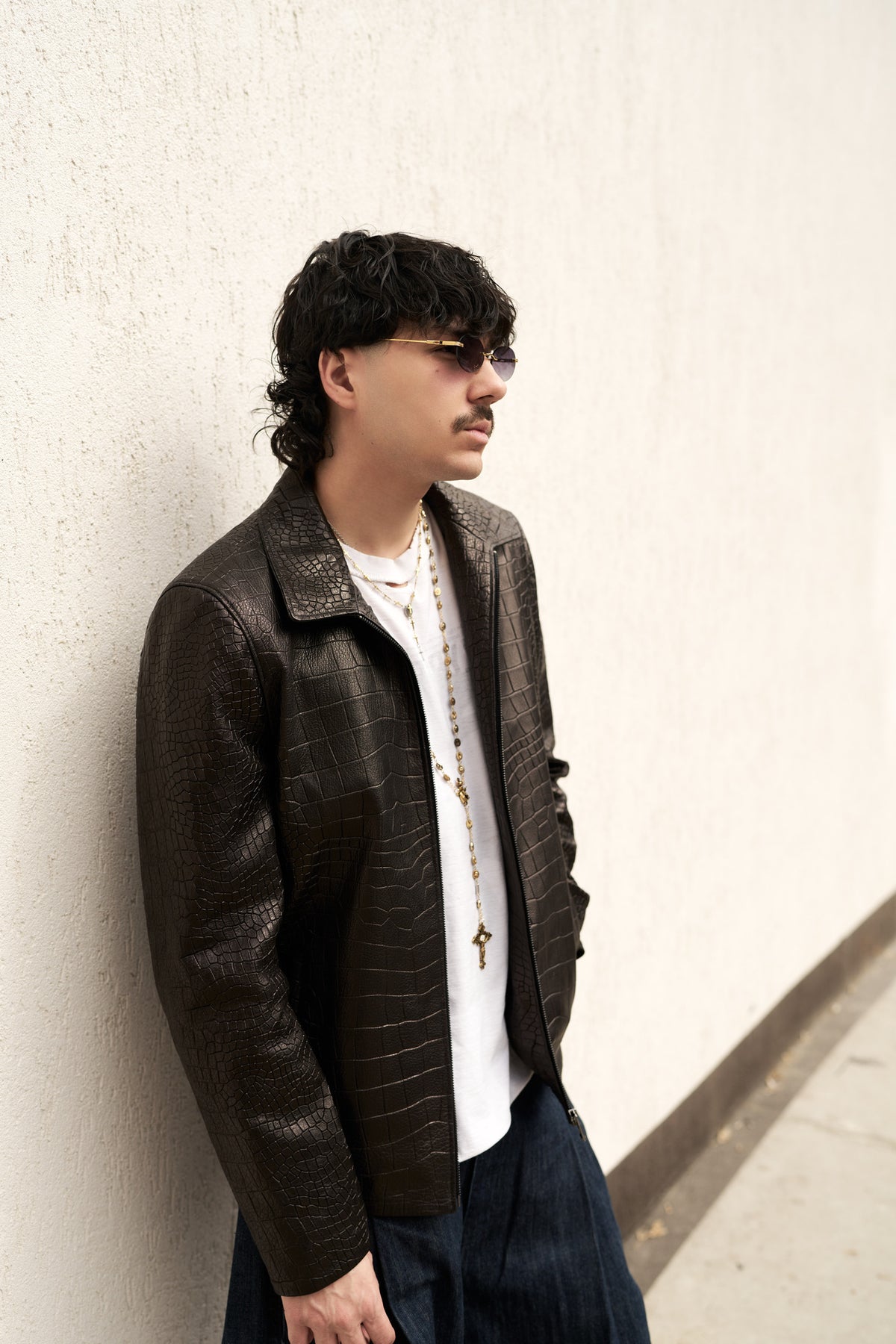
The leather jacket can be used in the transitional season, in casual and business casual outfits. Check the flexibility of the material, the regularity of the seams, the lining and the functioning of the zippers.
The cut should suit your personal style and the clothes you wear underneath. A trendy style is not a good long-term choice if it doesn't integrate into your regular outfits.
Wool and cashmere knitwear
For a sweater or cardigan, look at the density, texture, and elasticity of the material. Check if it regains its shape and if it can be worn alone, under a jacket, or under a coat.
A slight pilling can also occur in natural fibers and does not automatically indicate a poor product. What matters is the intensity of the phenomenon, the affected areas and the maintenance method.
Special pieces and limited collections
A piece with a distinctive design can remain relevant if it reflects personal style and is worn. Distinctiveness should not be confused with reduced utility.
The “limited edition” label alone does not prove quality, justified exclusivity, or sustainability. It applies the same criteria regarding material, construction, compatibility, and maintenance.
How to shop more carefully without replacing your wardrobe

Start with the clothes you have.
Take inventory of frequently worn items, items that need adjustments, and clothes that are difficult to combine. Try to understand why some products are used constantly, while others remain in the closet.
Repairing and repurposing an existing garment can be more useful than buying another one. There's no need to throw away fast fashion items that are still functional.
Use the three outfits rule
Before purchasing, imagine at least 3 combinations with the clothes you already own. Check if the product can be worn in different contexts, such as at the office, on the weekend, or on a date.
If a piece requires buying three other items to become usable, it may not be filling a real gap in your wardrobe.
Wait before purchasing
For non-urgent purchases, give yourself a period of reflection. Ask yourself if you want the product or if you are reacting to a discount, rarity, or promotion.
There is no universal number of days. It is important to have enough time between the impulse and the decision to verify the usefulness of the product.
Buy gradually
Prioritize frequently used clothes and gaps that limit multiple outfits. Avoid building a wardrobe that presents itself as responsible through a new series of quick purchases.
A capsule wardrobe can help you identify compatible pieces, but it doesn't have to be a complete overhaul. Start with what you have and only add to what you need again.
How to extend the life of your clothes

Follow cleaning instructions
Read the label before washing or cleaning. Wool, cashmere, leather and fur have different requirements and should not be treated with the same method.
For valuable pieces or difficult stains, call a specialist familiar with the material. Cleaning experiments can cause irreversible damage.
Store correctly
Coats and jackets are stored on hangers that support the shoulders, and knitwear is stored folded to prevent deformation. Protect natural materials from moisture, direct light, and moths.
Avoid prolonged storage in plastic covers when the material needs ventilation. Before seasonal storage, clean the pieces according to the label.
Repair before you replace
A loose button, a torn hem, or a small lining problem should be repaired before the damage spreads. In many cases, zippers or other components can also be replaced.
Adjustments made by a tailor can bring well-constructed clothes back into your wardrobe that no longer fit perfectly.
Slow fashion and capsule wardrobe

The two concepts support each other, but are not synonymous. The capsule wardrobe organizes a number of compatible pieces, while the slow approach also analyzes their provenance, production, purchase, maintenance, and lifespan.
A small wardrobe, frequently replaced, does not automatically follow these principles. At the same time, a larger wardrobe can be used responsibly if the clothes are worn, cared for and stored for the long term.
Common mistakes when trying to buy more responsibly

Among the most common mistakes are:
equating high price with sustainability;
considering all natural materials as ecological;
throwing away existing clothes to build a new wardrobe;
excessive buying from brands that use terms like "conscious" or "responsible";
pursuing an aesthetic that doesn't fit your personal style;
ignoring maintenance costs and requirements;
purchasing an investment piece that will be worn rarely;
considering a certification as the answer to all questions about the product.
Conclusion

Slow fashion starts with buying less, evaluating carefully, and using clothes for as long as possible. Material, cut, construction, provenance, maintenance, and lifestyle compatibility must be considered together.
Start with your wardrobe, repair what's worth keeping, and only buy what you really need. A piece becomes valuable over time not just through its price or story, but through how it's worn, maintained, and integrated into your daily life.